

How the WellHealthOrganic approach to skincare works, the ingredients behind it, and how to build a routine that actually fits your skin.
Search ‘organic skincare’ and you’ll find hundreds of pages recycling the same five tips — drink water, use aloe vera, avoid parabens. What most of them skip is the part that actually matters: which ingredients work for which skin type, how to sequence them, and how to tell real organic skincare from a marketing label. This guide covers the WellHealthOrganic philosophy of skincare — rooted in Ayurveda and clean ingredients — in a way you can actually put into practice today.
What Does ‘Organic Skincare’ Actually Mean?
Organic skincare uses plant-based, minimally processed ingredients grown without synthetic pesticides, and avoids parabens, sulfates, synthetic fragrance, and silicones. The WellHealthOrganic approach goes a step further by pairing this with Ayurveda — the idea that skin health reflects what’s happening inside the body, not just what’s applied on top of it. In practice, that means a routine built around three things: clean ingredients, consistency, and treating skin according to its type rather than following generic advice.
The Ayurvedic Foundation: Know Your Skin Dosha
Ayurveda classifies skin into three doshas, and the products that work well for one type can actually irritate another. Identifying yours is the single biggest upgrade you can make to an organic routine.

- Vata skin: Thin, dry, prone to fine lines and flaking. Needs rich oils and warm, grounding ingredients like sesame oil and shea butter.
- Pitta skin: Sensitive, prone to redness, breakouts, and heat-related irritation. Needs cooling, calming ingredients like aloe vera, rose water, and sandalwood.
- Kapha skin: Oily, thicker, prone to congestion. Needs light, clarifying ingredients like neem, turmeric, and clay.
Most people are a blend of two. If you’re unsure, start by noticing how your skin behaves in extreme heat versus cold — that usually points to whether Pitta or Vata is dominant.
Core Organic Ingredients Worth Building a Routine Around
| Ingredient | Best For | How to Use It |
| Aloe Vera | Hydration, calming redness, sunburn recovery | Apply fresh gel directly, or as a lightweight daily moisturizer |
| Turmeric | Inflammation, dullness, mild acne | Mix a pinch with gram flour and yogurt for a weekly brightening mask |
| Rosehip Oil | Fine lines, uneven tone, scarring | A few drops at night after moisturizer, in place of a heavier oil |
| Neem | Acne-prone and congested skin | Look for it in cleansers or use dried neem leaf powder in a mask |
| Honey (raw) | Antibacterial cleansing, deep hydration | Use as a 10-minute mask, or mixed into a cleanser |
| Jojoba Oil | Balancing oily and combination skin | A few drops massaged in as the last step of your PM routine |
Building an Organic Skincare Routine
Morning
Cleanse with a mild, sulfate-free gel or gram-flour-based wash. Follow with a rose water or cucumber-based toner to balance pH. Apply a lightweight, organic moisturizer suited to your dosha, then finish with a mineral sunscreen — this step is non-negotiable, since even the cleanest routine can’t undo daily UV damage.
Evening
Remove makeup and sunscreen with an oil-based cleanser (jojoba or coconut oil works well), then follow with your regular cleanser. Apply a treatment serum — rosehip oil for aging concerns, aloe vera for calming — and seal with a slightly richer night cream than you’d use in the morning.
Weekly
Add one exfoliation (a gentle oat or rice-powder scrub, not a harsh physical scrub) and one mask suited to your skin’s current need — turmeric for dullness, aloe vera for irritation, or clay for congestion.
Organic vs. Chemical Skincare: What the Evidence Actually Shows
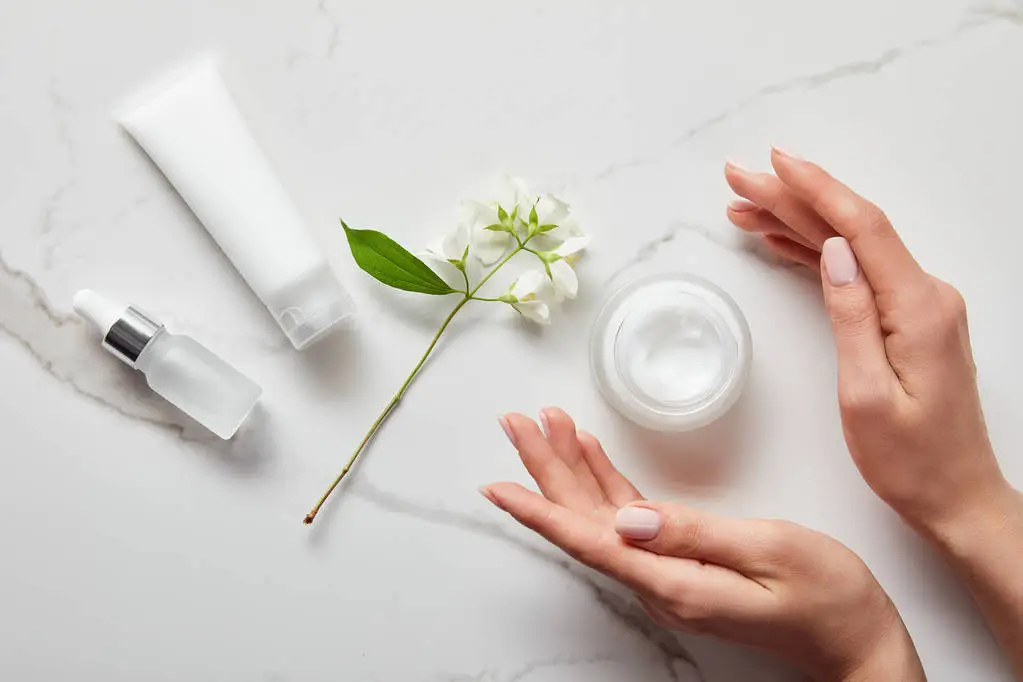
Organic skincare isn’t automatically ‘better’ in every case — some conventional ingredients, like niacinamide and hyaluronic acid, are also gentle and effective, and not every synthetic ingredient is harmful. What the research does support is that reducing exposure to parabens, sulfates, and synthetic fragrance lowers the risk of irritation and hormonal disruption for sensitive skin types, and that plant-derived oils and butters perform comparably to many synthetic emollients for barrier repair. The honest takeaway: organic skincare is about ingredient quality and transparency, not a blanket rule that natural always beats synthetic.
Seasonal Organic Skincare (Ritucharya)
| Season | What Skin Needs | Ingredients to Reach For |
| Summer | Lightweight hydration, cooling, sun protection | Rose water, aloe vera, cucumber, mineral SPF |
| Monsoon | Anti-fungal, oil control | Neem, tea tree, clay masks |
| Winter | Deep nourishment, barrier repair | Sesame oil, shea butter, honey masks |
| Spring | Gentle detox and exfoliation | Rice powder, turmeric, light oils |
Common Mistakes When Switching to Organic Skincare

- Trusting the word ‘natural’ on the label: A product labeled ‘natural’ isn’t regulated the same way as ‘organic’ — check for actual certifications like USDA Organic.
- Assuming natural means non-irritating: Undiluted essential oils and citrus juice can irritate skin more than most synthetic products. Always patch test.
- Expecting overnight results: Organic ingredients still need 4–8 weeks to show visible results — switching products every week resets that clock.
- Skipping the basics for DIY remedies: Homemade masks are a nice weekly addition, but they can’t replace a consistent daily cleanse-moisturize-SPF routine.
Frequently Asked Questions
Is organic skincare actually better for sensitive skin?
Generally yes — fewer synthetic fragrances and preservatives means a lower chance of triggering a reaction. That said, always patch test new organic products too, since natural ingredients like citrus and essential oils can still irritate sensitive skin.
How long before organic skincare shows results?
Most people notice softer, calmer skin within two to four weeks, with more visible changes in tone and texture around the six-to-eight-week mark — similar to conventional skincare timelines.
Can I mix organic products with my existing routine?
Yes. Start by swapping one step at a time — cleanser first, then moisturizer — rather than replacing your entire routine at once, so you can track what’s actually working.
Do I need to know my Ayurvedic dosha to start?
No, but it helps you choose faster. If you’d rather skip it, start with gentle, universally tolerated ingredients like aloe vera and rose water, and adjust from there.
Organic skincare works best when it’s treated as a system, not a single swap — the right ingredients, matched to your skin type, used consistently. Start with your cleanser and sunscreen, layer in the ingredients your skin actually needs, and give it a full month before judging the results